The difference between school and life? In school, you're taught a lesson and then given a test. In life, you're given a test that teaches you a lesson.
Thursday, March 8, 2012
Thursday, February 9, 2012
Medieval Towns
Questions:
1. How did medieval towns make their living?
2. Which groups of people controlled all of trade (buying & selling) in medieval town?
3. What was the name given to a boy who was learning a trade in a medieval town?
4. What did a journeyman have to make before he could become a member of a guild?
5. What did a journeyman become when he joined a guild?
6. Why did serfs run away from their villages to live in medieval towns?
Answers: the guilds, a master craftsman, an apprentice, a masterpiece trade, to become free, a masterpiece
Why was fire such a problem for medieval towns? (Explain why there were a lot of fires and why they caused so much damage).
Monday, February 6, 2012
Holidays
- Medieval holidays honored important events in the life of Jesus, such as his birth and Resurrection. Holidays also honored Christian saints and important religious concepts.
- People celebrated holidays by attending church and with feasts, music, dancing, games, and other forms of entertainment.
![]() |
| Battle of Carnival and Lent by painter Pieter Brueghel |
Art and Architecture
- Since most people could not read, art helped them understand Biblical stories.
- Cathedrals were large churches and the seat of a bishop. Some key features included the nave, transepts, flying buttresses, gargoyles, pillars, and stained glass windows.
![]() |
| flying buttresses |
![]() |
| nave |
![]() |
| Cathedral ground plan. The shaded area is the transept; darker shading represents the crossing. |
![]() |
| transept |
![]() |
| gargoyles |
![]() |
| pillars |
![]() |
| stained glass window |
Thursday, February 2, 2012
Education in Medieval Europe
- Most schooling took place in monasteries, convents, and cathedrals. Much time was spent memorizing prayers and passages form the Bible in Latin.
- Aquinas was an Italian scholar of philosophy and theology. He tried to bring together ancient philosophical ideas about reason and medieval theological beliefs about faith.
During the Middles Ages, most schooling took place in monasteries, convents, and cathedrals. The clergy were the people most likely to be educated. Most of the students in church schools were sons of nobles who were studying for careers in the clergy. Starting in the 1200s, cathedral schools gave rise to universities. Students studied latin grammar and rhetoric, logic, geometry, arithmetic, astronomy, and music. Books were hand copied and rare, so teachers often read to students.
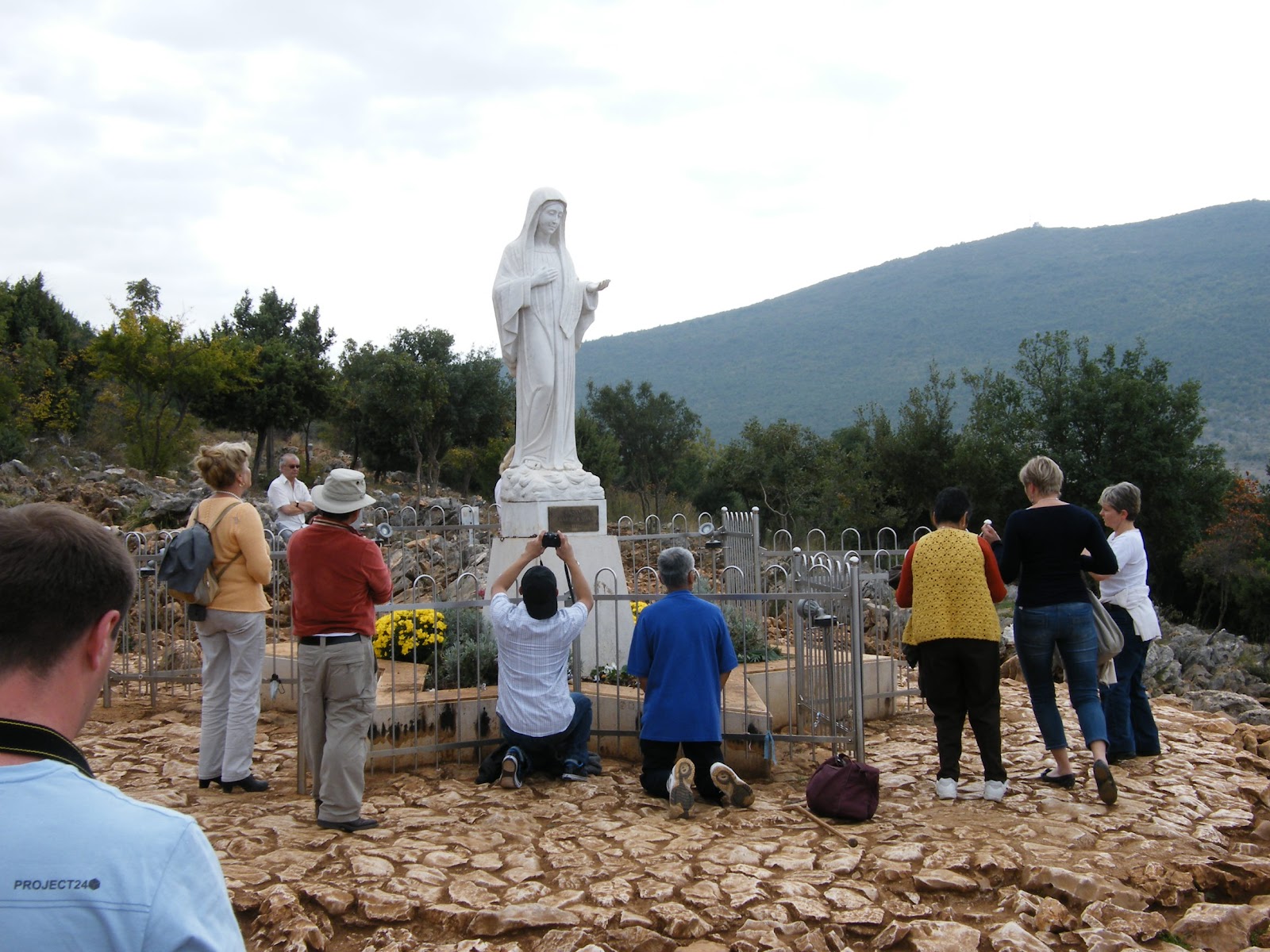
Pilgrimages and Relics
A journey, especially a long one, made to some sacred place as an act of religious devotion
People went on pilgrimages to show devotion to God, as an act of penance, or to find a cure for an illness. Popular destinations included Jerusalem, Rome, and Canterbury.
| The hill of apparitions in Medjugorie, Bosnia and Herzegovina. |
![]() |
| Some European pilgrims on the ancient pilgrimage road to Santiago de Compostela in 2005. |
![]() |
| Saint Catherine's Monastery, Mount Sinai |
Wednesday, February 1, 2012
The 7 Sacraments
Baptism ... Birth
Confirmation ... Young Adult
Eucharist ... The Body if Christ
Matrimony
Holy Orders ... Becoming a Priest or Nun
Penance ... Confession of Sins
Last Rights ... Death
- The church taught that Christians had to receive sacraments in order to achieve salvation.
- The seven sacraments were baptism, confirmation, Eucharist, matrimony holy orders, penace, and extreme unction.
The Role of the Church in Medieval Europe
![]() |
| The Mass of Saint Giles, painted around 1500 |
- Initially, the Romans persecuted Christians for their beliefs.
- By the start of the Middle Ages, all Christians in western Europe belonged to a single church, which became known as the Roman catholic Church.
- The church provided leadership and over time developed an organization that was modeled on the structure of the Roman government.
- Monasteries, or communities of monks, copied and preserved old texts, and in this way helped keep learning alive.
- During the Middle Ages, the church acquired great economic and political power that at times rivaled that of the monarchs.
Subscribe to:
Posts (Atom)


.jpg)


.jpg)


.jpg)